12 min read
The Pattern
Eleven businesses. One arc. A field report.
Every business I have built has been a bet on the same thing. Most operators confuse effort with leverage. They run a harder version of the same play. I am interested in the play nobody else is running yet.
I call this the Squeeze and the Separation. Every industry I have watched up close gets squeezed by the same forces. Cheaper inputs. Better tools. Faster learning curves. The operators who survive see where the split is opening and move before consensus catches up.
Eleven businesses got me here. Most were unglamorous. Some failed. The ones that worked taught me to read the field earlier than the next operator. The ones that failed taught me what I was missing. This is the pattern.
Before I knew what I was doing
My first business was mowing lawns on a ride-on tractor when most kids my age were pushing mowers. Faster cycle time, more lawns per Saturday, higher dollars per hour. I did not have the vocabulary for it. I had the instinct.
At 16, I sold long-distance phone service door to door. The product was a commodity. The close was my only edge. I learned more about reading a room in one summer than I did in four years of school.
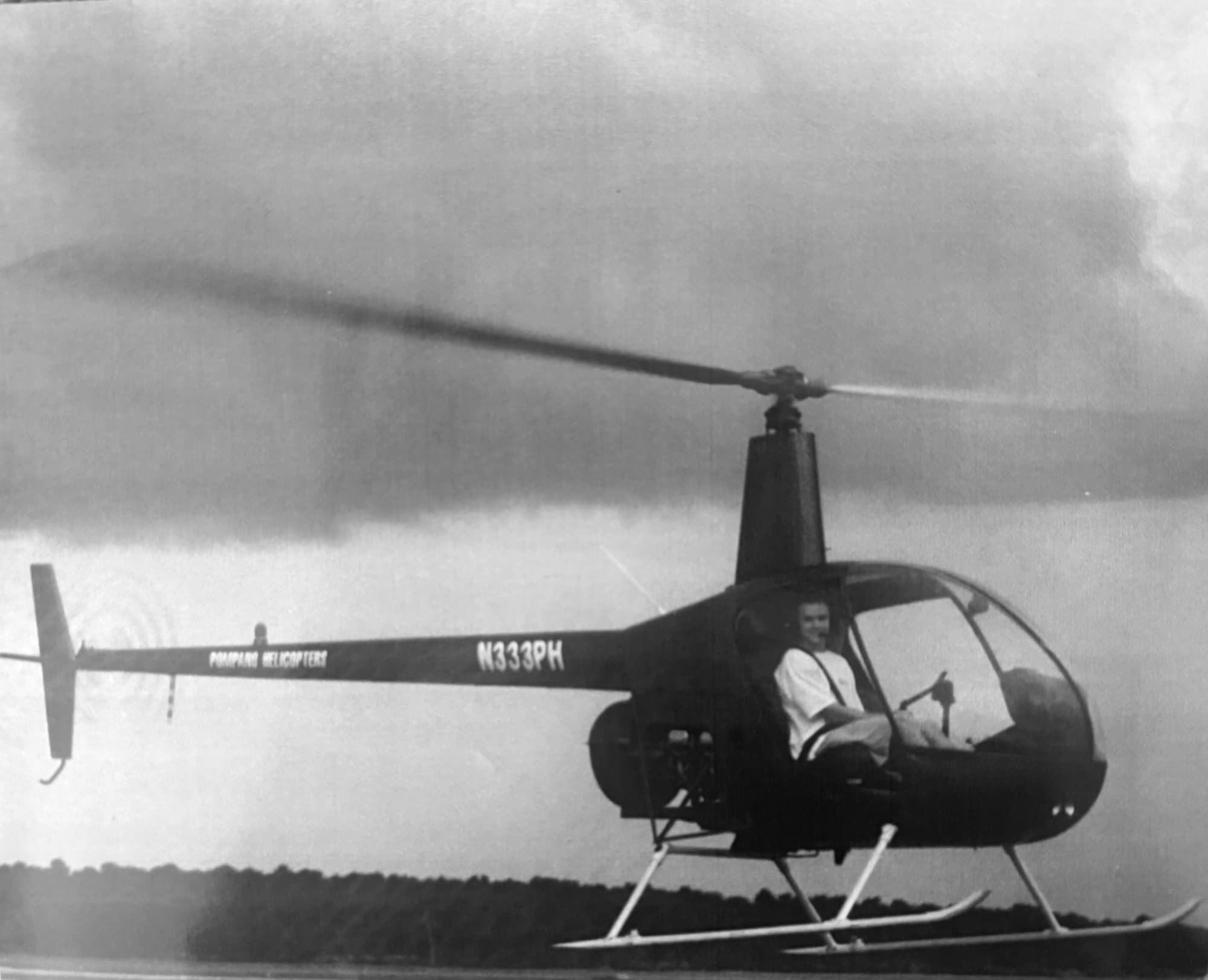
Around the same time, I soloed a helicopter. I got my license on my 17th birthday. One of the youngest licensed helicopter pilots in the country at the time. I was drawn to interfaces where the margin for error was measured in seconds. That never changed.
As a realtor, I put my face on an eco-friendly golf cart and drove it through town. Every other agent was running the same newspaper ad. I picked a distribution channel nobody else owned. Leads came.
The last pre-2011 chapter was house flipping. I paid a garbage truck driver to dump a load on a condemned property while we filmed it. The clip landed us on Flip This House. I was not a better flipper than anyone else. I packaged the business into something a TV producer wanted to air.
Six bets that built the pattern
This is not a highlight reel. Each one taught me a specific rule I still operate by. Some were wins. One killed the company. The lessons compound.
Flight Instructor (2011)
What existed. Commercial flight instruction was the standard ladder to airline hours. A teacher-student grind, priced by the hour, full of checklists and procedures the FAA had spent seventy years refining.
What I saw. The job was a decision-making gym. You fly with pilots who might get you killed. Your only tool is a system strong enough to catch mistakes before they catch you.
What I did. Taught for close to four years. Flew over a thousand hours. Made every student check the list even when they knew it.
What happened. I came out with the framework I still use. Checklists catch drift. Procedures hold the floor. The skill worth developing on top of procedure is knowing when to override it. Override only when the data you have is richer than what the procedure was designed for. Every business I have built since runs on that frame.
Wee Bee Beanery (2015)
What existed. Coffee shops with 1,500 square feet, long leases, six-figure buildouts, and three people on staff before the first cup got poured. Most of the spend was atmosphere.
What I saw. The product is hot water and beans. The rest is theater. If I strip the theater, I can run higher margins in a footprint nobody else would touch.
What I did. Built the smallest coffee shop I could make viable. Worked out of a trailer. Only sold handcrafted pour-overs, slow on purpose. Parked where industrial foot traffic was already captive. Kept overhead near zero.
What happened. There was almost always a line. Margins were strong. I sold the business because revenue scaled linearly with my hands on the espresso machine, and linear scaling is a ceiling. The rule I took from it: operating leverage beats product love. If the math caps your growth to your effort, exit the thesis and redeploy.
EOS San Francisco (2018)
What existed. Crypto was running on belief. EOS raised $4.2B, the largest ICO in history at the time. The community wanted infrastructure. The protocol wanted Block Producers to launch and run the chain.
What I saw. Being in the room where the network was forming was the asset. The Block Producer slot was a community position as much as a technical one.
What I did. Founded and ran EOS San Francisco. Hosted the largest EOS meetups in the city. Assembled a team of engineers and community operators, won the Block Producer slot, and helped launch the EOS blockchain to the world at a hackathon in SF after the ICO.
What happened. Networks reward density. Credentials count for less than how central you were when the network was forming. Being there early compounds for years. The Block Producer slot was a community position more than a technical one. That position outlasted the hype cycle.
VR Ninjas (2019)
What existed. Consumer VR was taking off and people were punching their televisions. They could not tell where the edge of the play space was.
What I saw. A physical situational-awareness mat that anchored the player to the center of the room would cut the breakage problem to near zero. The product was cheap to build and the pain was real.
What I did. Designed the mat, had the mold made in China, shipped the product, and listed on Amazon. Sold over $100K before the knockoff hit.
What happened. A Chinese manufacturer copied the mold, listed the same product next to mine on Amazon, and undercut my $70 SKU at $49. I had no defensible moat and the lifeblood of my supply chain sat in someone else's factory. They squeezed my margins and took the business. The rule: if your moat is that you shipped first, you do not have one. Moats are brand, distribution, data, or cost structure nobody else can replicate. Velocity alone is only a head start.
Electric Elf (2021)
What existed. Christmas light installation in Silicon Valley was a fragmented trade. No brand anyone remembered. No online booking. Every quote required the installer to drive to the house, eyeball the roof, and hand-write a price. Two calls and two weeks before the homeowner got a number.
What I saw. The trade was sold like a trade. The buyer wanted an ecommerce experience. Someone who showed up with packages, photos, one-click booking, and a price within the hour would own the market before the competition noticed.
What I did. Built it in Silicon Valley. Fixed-price packages on a clean site with photos. One-click booking. The unlock: we quoted remotely from Google Maps satellite imagery. Measured the roofline and eaves from the image, estimated footage, quoted from my laptop. Never drove out to quote.
What happened. Serviced over 100 homes in a season. Cleared over $200K in a two-month window. Cost to quote dropped to near zero, which meant I could out-respond the rest of the market on speed and still keep margin. The rule: any trade can be sold like a product. The gap between how a trade is sold and how the buyer wants to buy is usually where the margin lives.
The Mat (2021)
What existed. Laundromats run on quarters. Owners spend most of their week unjamming machines, collecting coins, emptying hoppers, and fighting the coin changer when it eats someone's bill. Industry consensus: the customer base is lower-income and low-tech, so cashless will not work here. Most operators were barely willing to move to credit cards.
What I saw. The work savings of going fully cashless and app-only would be worth more than any revenue I would lose from customers who refused to adopt. The math was clean. Everyone told me I was wrong about the customer.
What I did. Partnered with Speed Queen and built the 8th fully app-based laundromat in the United States. No quarters. No credit cards. One app, one kiosk. Used the data coming off the app to adjust pricing and read customer behavior in real time.
What happened. The location still runs. The app cut about 80 percent of the hidden work. We built playbooks and redundancies until the systems did what used to take a team of five. Now a team of one runs it. Margins held. Consensus was wrong about whether the customer would switch. The rule: human nature defaults to the status quo. Old businesses defend it hardest. Technology can be applied to anything now. When your math works and consensus says you are crazy, consensus is defending the old way.
Landy Leads to Land AI
I have saved this one for the end because it is where every prior lesson shows up in one place.
Landy Leads (2023)
What existed. Cold calling for land investors barely existed as a category. Land Elites was first by about three months. The playbook was volume calling, rough qualification, hand the raw lead to the investor. We both came out of a coaching program around the same time. They beat me to launch.
What I saw. After a year of running it, the bottleneck moved. Capturing leads was the easy part. The investor was the bottleneck. Most of our clients could not sort and qualify fast enough to close what we sent them. The value was leaking between the cold call and the closer.
What I did. Hired a team of salespeople, trained them as lead managers, and had them call every raw lead back before it went to the client. Pre-qualified with real human judgment. We were the only company in the world running human pre-qualification in this category.
What happened. Revenue climbed and client retention climbed with it. The new bottleneck was the team itself. Training lead managers at scale was brutal. Monitoring them was harder. Quality drifted. Consistency was a daily fight. The rule this surfaced: every layer you add to fix a bottleneck creates a new one one level up. The question is whether the new bottleneck is easier to hold.
Land AI (2025)
What existed. By early 2025, conversational AI was moving faster than most operators were tracking. Most of my industry was still treating it as a toy.
What I saw. Late one night in March, I was running a conversational model and saw the curve clearly. The tech was raw. The arc was unmistakable. This was the layer that could replace the lead manager tier and hold the quality standard every call, every hour, every day. The bottleneck that Landy Leads had surfaced now had an answer.
What I did. Stopped taking new clients. Went into stealth. Rebranded to Land AI because the right name for the play was the whole category. Five months of heads-down build. $300K of my own money. Went into debt. Launched out of stealth in August of 2025.
What happened. Land AI replaces the lead management tier with AI that holds the standard every time. The margin on this business is structural. The quality is no longer people-bound. The rest of the industry is now running the old play.
The pattern
Eleven businesses. One arc.
Land AI is where every rule comes together.
If you are going to play the game, try to win.
My grandmother.